Struggling with Gas and Constipation? The Solution Might Be Simpler Than You Think

Imagine starting your day with a heavy feeling in your stomach, or finishing your favorite meal only to be met with uncomfortable bloating and embarrassing gas. Constipation and gas aren’t just minor annoyances—they’re real signals from your body telling you that something in your digestive system isn’t working right.

Millions of people deal with these symptoms daily, searching for a quick fix. But the root of the problem often runs much deeper than we imagine, hiding in a place most people overlook: your stomach acid
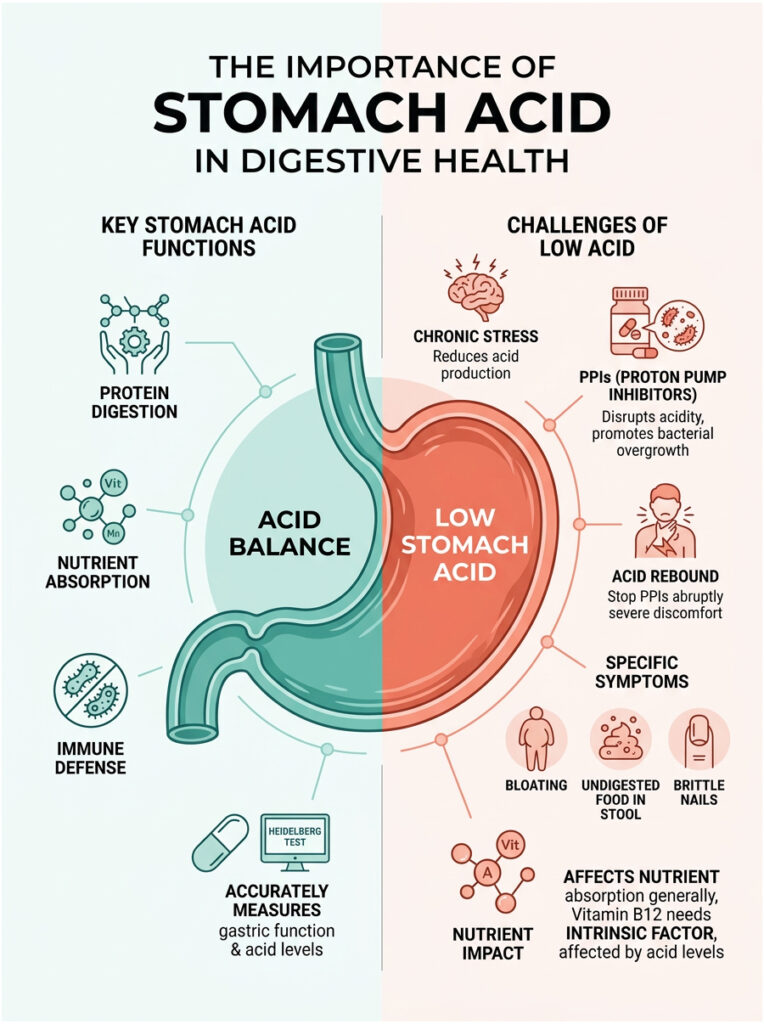
Infographic illustrating the importance of stomach acid in digestive health, comparing acid balance functions with challenges of low stomach acid.
Image source: HealthcareOnTime (What Is the Role of Acid in the Stomach?)

Stomach Acid: Your Friend, Not Your Foe

When we hear stomach acid, we usually think of heartburn and acid reflux, assuming it’s an enemy we need to get rid of. But the scientific truth is quite the opposite. Low stomach acid (a condition known as hypochlorhydria), not high stomach acid, is often the hidden culprit behind many chronic digestive issues.

Hydrochloric acid (HCl) is the powerful acid your stomach produces, and its role goes far beyond just digesting food. Here’s exactly what it does for you:

    • It breaks down protein and unlocks nutrients: It helps your body absorb essential nutrients like Vitamin B12, iron, calcium, and magnesium. Without enough acid, these nutrients stay trapped in your food, and your body can’t use them.
    • It acts as your first line of immune defense: It kills harmful bacteria and viruses that may enter with your food.

When your body suffers from low stomach acid, these vital processes break down, triggering a cascade of problems

How Does Low Stomach Acid Actually Cause Gas and Constipation?

The connection here is direct and powerful. Think of stomach acid as the gatekeeper that keeps order in your digestive tract.

Food Fermentation and Excess Gas:

Without enough acid, food—especially protein—doesn’t get broken down properly. This undigested food travels to your intestines where it ferments, producing excessive gas that leads to bloating and frequent belching.

Bacterial Overgrowth (SIBO):

Low acid allows harmful bacteria to overgrow in your small intestine—a condition known as SIBO (Small Intestinal Bacterial Overgrowth). This bacterial imbalance is a primary driver of gas, bloating, and either diarrhea or constipation.

Poor Absorption and Constipation:

Low acid hinders the absorption of essential minerals like magnesium, which is crucial for normal bowel movements. A deficiency here directly leads to chronic constipation.

In short, low stomach acid turns your digestive system from a well-oiled machine into a breeding ground for issues, manifesting as gas, constipation, and general indigestion.

Warning Signs: Are You Suffering from Low Stomach Acid?

If you experience one or more of these symptoms, low stomach acid could be the underlying cause of your discomfort

    • Bloating and gasright after meals, especially protein-heavy ones.
    • Frequent belchingor feeling like food is stuck in your chest.
    • Heartburn or acid reflux(ironically, low acid can cause reflux due to rising gas pressure).
    • Chronic constipationor alternating bouts of diarrhea.
    • Feeling full quicklyeven when eating small portions.
    • Brittle nails and hair or anemia, resulting from poor nutrient absorption
Alt Text: Close-up of a woman using a wooden spoon to scoop homemade sauerkraut from a glass jar, with fresh ginger slices, apple cider vinegar, a small glass of water, and a chicken breast salad arranged on a rustic wooden table under warm, natural light.

What Can You Do? Practical Solutions and Golden Tips

The good news? This can be fixed. Here are some practical tips you can start using today:

1.Rethink Your Diet

    • Eat protein at the start of your meal: This naturally stimulates acid production.
    • Drink water, but go easy during meals: Chugging large amounts of water while eating dilutes stomach acid and weakens its power. Aim to hydrate between meals instead.
    • Add natural soothers: Ginger is excellent for calming the digestive tract and reducing bloating.

2. Consider Natural Supplements

    • Diluted Apple Cider Vinegar: A teaspoon in a glass of water before meals may temporarily help raise stomach acidity.
    • Probiotics: These help restore the balance of good bacteria in your gut. You can get them naturally from yogurt (look for “live and active cultures”), kefir (a fermented milk drink), sauerkraut, kimchi, fermented pickles, miso, or kombucha. They are also widely available as over-the-counter supplements at pharmacies.

3. Avoid Acid Blockers Unless Prescribed

Overusing antacids can lower your stomach acid even further, ultimately making your digestive issues worse in the long run.

4.Consult a Professional

If symptoms persist, it’s crucial to see a doctor for proper testing and a tailored treatment plan.

Why GastroZen by HyrboLife Is Your Smart Choice

GastroZEN is specifically designed to provide targeted digestive relief. It utilizes a technology based on the viscerocutaneous reflex to gently stimulate the vagus nerve, promoting digestive comfort and regularity.t’s the ideal choice for anyone seeking a holistic, natural approach.

The Takeaway

Remember: your health truly begins in your gut. Don’t ignore the signals your body is sending you. By understanding the crucial link between stomach acid and digestion, and by taking practical steps—supported by a specialized product like GastroZen—you can reclaim your digestive comfort and enjoy a life free from daily discomfort.